
Pakistani Aaloo Qeema – Mince & Potatoes
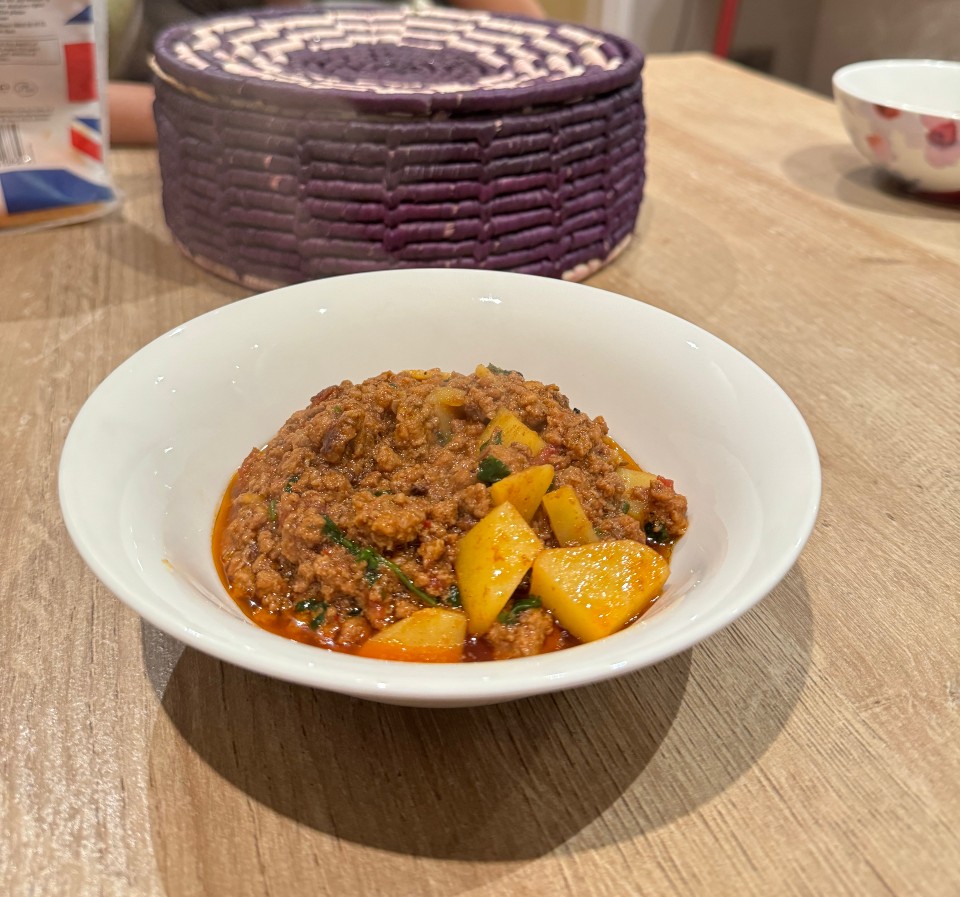
A homestyle Pakistani dish of minced meat and potatoes cooked with red onions, tomato, yoghurt and simple spices until the qeema is savoury, the potatoes are tender and the finished dish is moist rather than saucy.
A recipe I learned before leaving home
This is another one from the same old notebook where I wrote down the dishes my mother taught me before I returned abroad for my studies.
The page is dated October 2006.
The original recipe says:
- 450g qeema
- 3 medium potatoes
- 2 medium onions
- tomatoes
- yoghurt
- spices
- and enough water to bring it all together
Nearly twenty years later, I still make it in essentially the same way.
What has changed is mostly how precise I pretend to be.
If Tesco sells the mince in a 500g pack, I use 500g.
If I have beef, I use beef.
If I have chicken, turkey or mutton mince, I use that instead.
The basic masala works across all of them.
What changes is the cooking time.
That is probably a more truthful way to publish this recipe than pretending the original 450g was some sacred mathematical ratio.
My handwritten Aaloo Qeema notes from October 2006, written while learning the recipe from my mother. Photograph to come.
What is aaloo qeema?
Aaloo qeema – also written aloo keema – is a Pakistani dish of minced meat cooked with potatoes in a spiced onion-and-tomato base.
It sits somewhere between a dry curry and a gravy dish.
It should not be swimming in sauce, but it should not be dry either.
The final texture I want is moist, coated, spoonable – but definitely more dry than wet.
The potatoes should be soft enough to break easily with a fork, while the mince should be deeply savoury rather than grey or watery.
Which mince should I use?
This recipe works with beef, mutton, chicken or turkey mince.
The basic technique stays the same. The timing does not.
Beef. I prefer lower-fat beef mince. I don't want greasy qeema, and I don't particularly enjoy the stronger smell or chewy fatty bits you sometimes get from higher-fat mince.
Mutton. Mutton has a stronger flavour and usually needs a little more cooking time than chicken or turkey.
Chicken. Chicken cooks faster and can dry out if treated like beef. Once the excess moisture has evaporated and it is cooked through, move on.
Turkey. Turkey mince works surprisingly well in this recipe and I have used it many times. It is lean, so be conscious of overcooking it.
Red onions, not white
For Pakistani cooking, my default onion is red onion.
That is what I grew up with, and it is what I expect these dishes to taste like.
White, yellow or French onions work if that is all you have. I have used them before. The result is not terrible.
But I would still consider them a substitute rather than the default.
For this recipe, use 2 medium red onions, finely chopped.
A note on garlic and ginger
Freshly crushed garlic and ginger in a pestle and mortar are my preference. But this is not a purity test.
You can also chop them finely, use frozen garlic and ginger cubes, or use paste if that is what you have.
Frozen cubes are often larger than the exact amount written in the original recipe, so if you are using them, use sensible equivalents rather than trying to shave fractions off a frozen cube.
Step by step
Step 1
Prep the potatoes
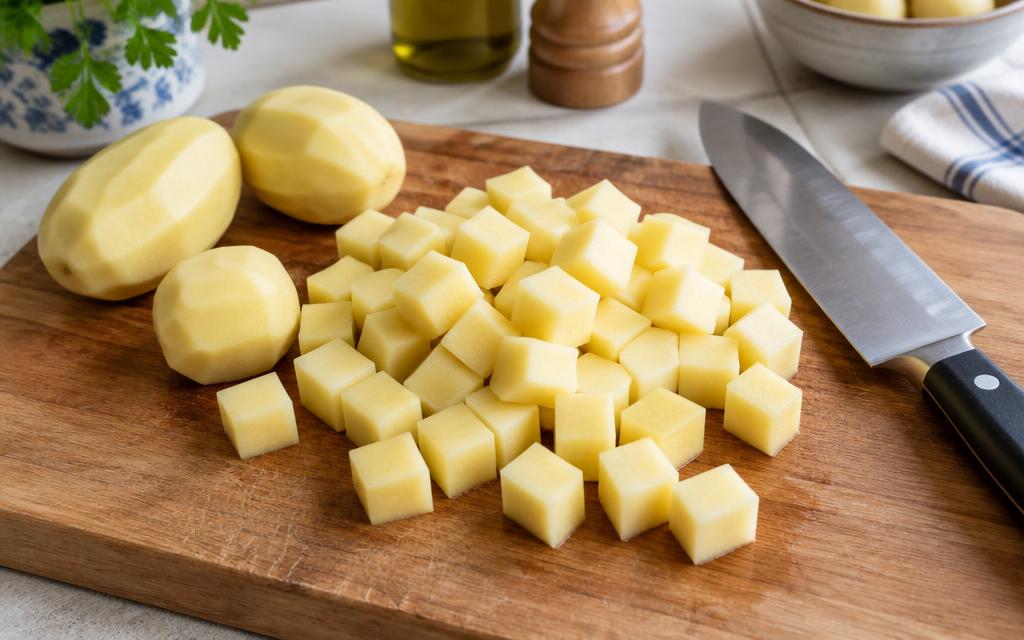
Peel the potatoes and cut them into medium cubes. Try to keep the pieces reasonably similar in size so they cook evenly. You want them small enough to become tender within the final simmer, but large enough that they do not dissolve into the qeema.
Step 2
Fry the red onions
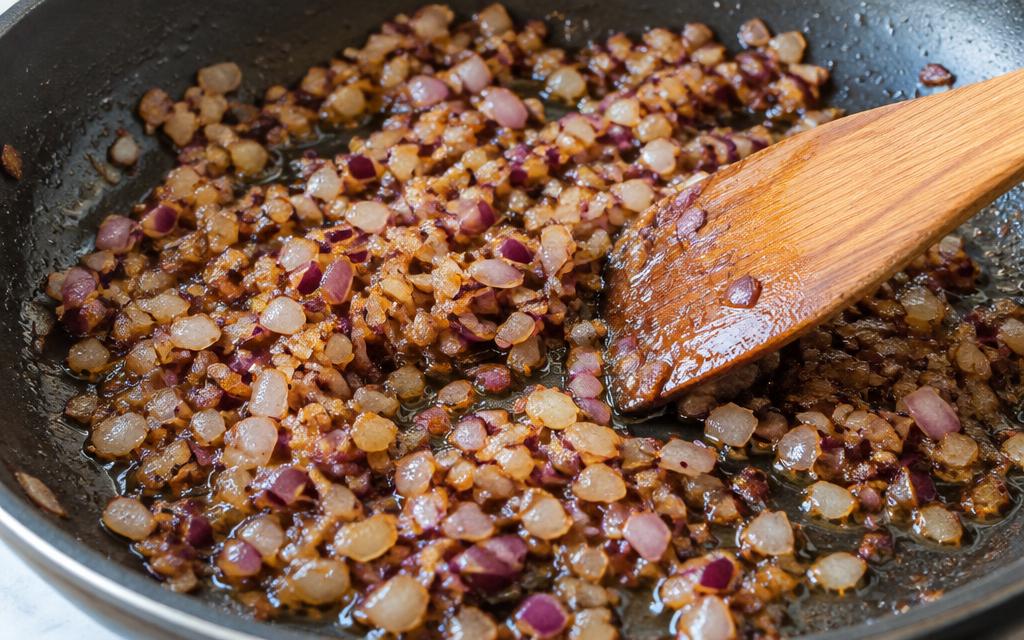
Heat the oil over medium heat. Add the finely chopped red onions. Cook, stirring regularly, until they are soft and starting to turn properly golden-brown. Do not rush this stage: the onions become part of the flavour base of the entire dish.
Tip: Colour here is flavour later.
Step 3
Add the qeema, ginger and garlic
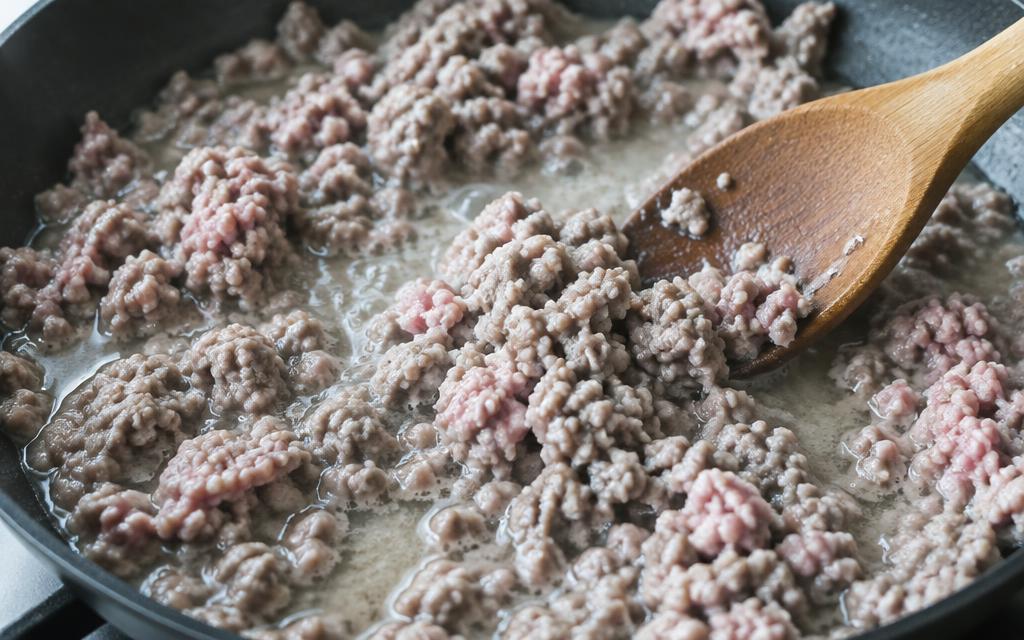
Add the minced meat, ginger and garlic. Break the mince apart thoroughly with your spatula or spoon and keep stirring. At first the meat may release quite a lot of water. That is normal. Do not immediately move on just because the meat has changed colour.
Step 4
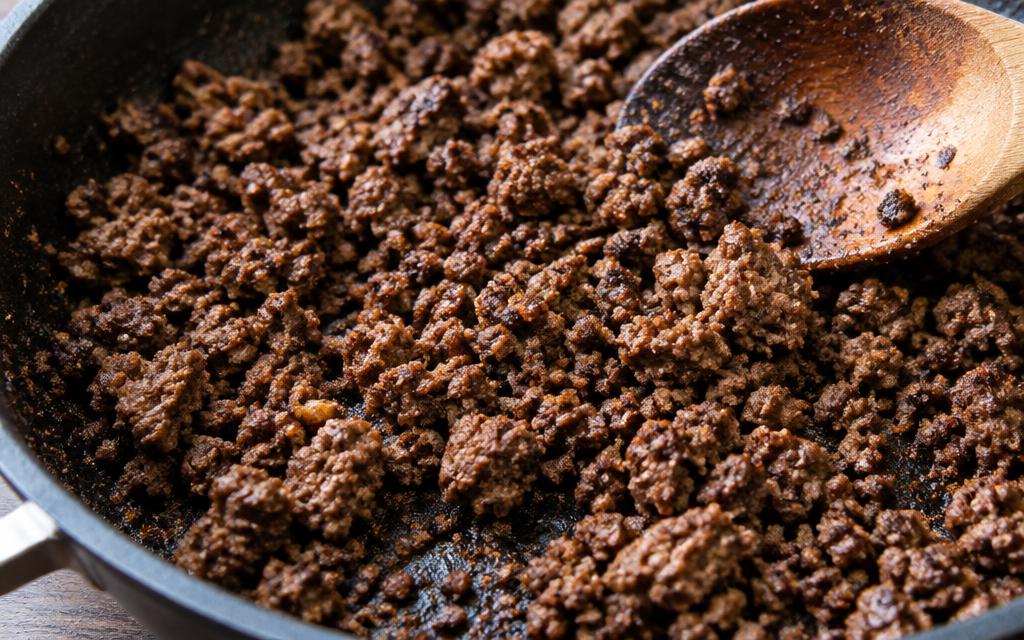
Cook until the moisture dries
Continue cooking over medium heat, stirring and breaking up the meat. You are waiting for two things: the liquid released by the mince to evaporate, and the meat to start browning rather than simply steaming. For beef or mutton this may take around 8–10 minutes. Chicken and turkey may need less. Use the pan, not the clock, as your guide.
Tip: Chicken and turkey get there sooner than beef or mutton.
Step 5
Add the dry spices
Add the red chilli powder, turmeric, ground coriander and the initial amount of salt. Add approximately 60ml / ¼ cup water and stir continuously for about 2 minutes. This small amount of water helps distribute the spices and prevents them from catching while the masala develops.
Step 6
Add the tomatoes and yoghurt
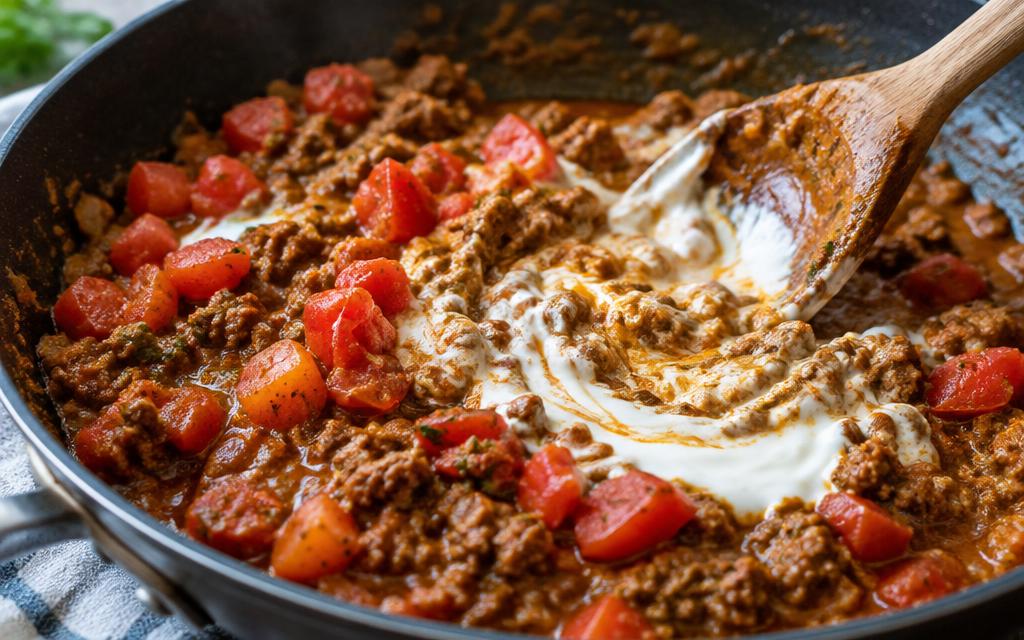
Add the chopped tomatoes and yoghurt. Stir thoroughly and cook for approximately 5–10 minutes, stirring regularly. If the mixture begins to catch or becomes too dry before the tomatoes have properly broken down, add a small splash of water. The aim is a cohesive masala around the mince.
Step 7
Add the potatoes
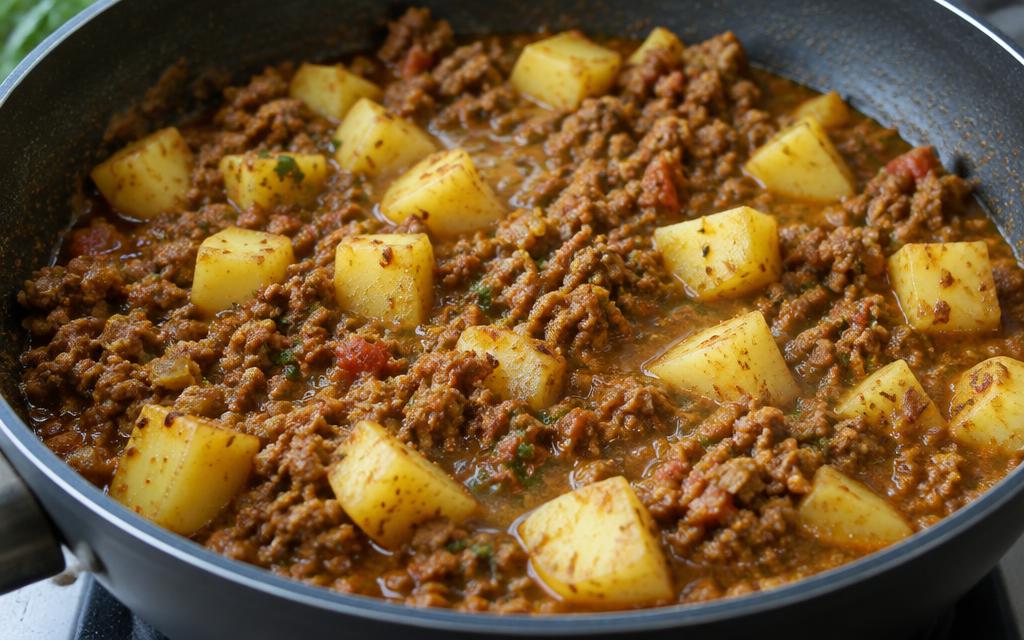
Add the cubed potatoes and mix thoroughly so they are coated in the qeema and masala. Add approximately 200–250ml / around 1 cup water. You do not want to drown the dish. This water is primarily there to cook the potatoes and help the flavours come together.
Step 8
Cover and cook
Cover the pan and reduce to low heat. Cook for approximately 25–30 minutes, or until the potatoes are tender, stirring occasionally. The exact time depends on the potato size, the pan, the heat, the meat used and how much liquid is present. If the potatoes are not cooked and the pan is becoming too dry, add a small amount of water. Do not add large amounts at once.
Tip: Small splashes of water, not large pours.
Step 9
Add green chillies and coriander
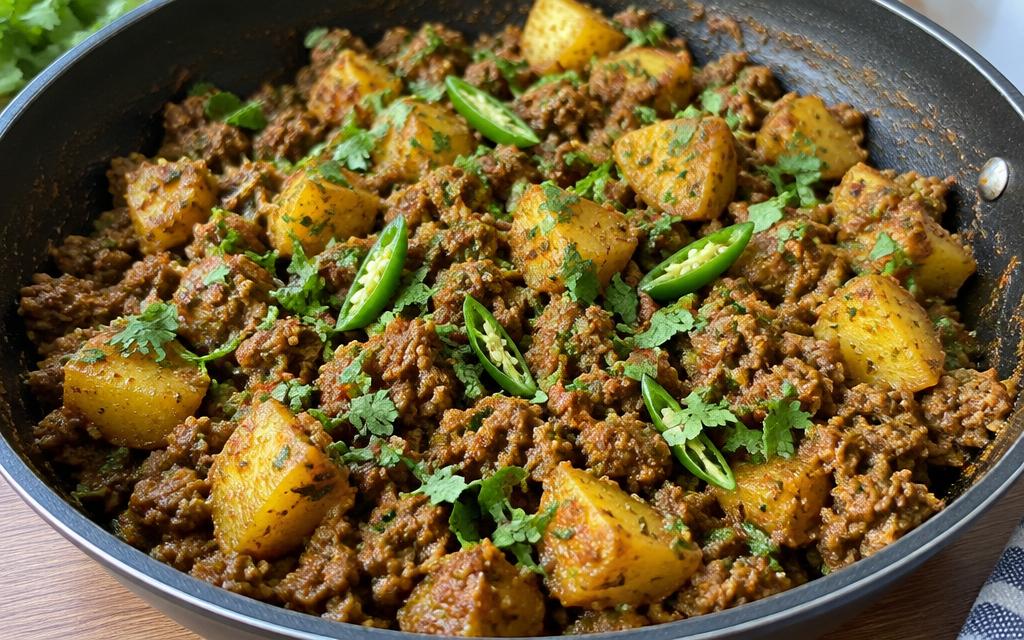
Once the potatoes are nearly tender, add the green chillies and stir them through. Add the chopped fresh coriander near the end. Cook uncovered briefly if the dish is wetter than you want.
Step 10
Get the final texture right
The finished aaloo qeema should be moist but not wet. There should be enough masala clinging to the meat and potatoes that the dish feels juicy and rich, but there should not be a pool of gravy around it. If it is too wet, cook uncovered for a few minutes. If it is too dry, add a small splash of water and stir through. Taste and adjust the salt, chilli and coriander.
Tip: More dry than wet, but never dry enough to feel dusty or crumbly.
What to serve with it
How I eat aaloo qeema
My default is roti. That is how I think this dish works best.
Rice is perfectly good too, especially if you prefer eating qeema with a spoon.
But there is another use for leftovers that deserves more attention.
The leftover sandwich
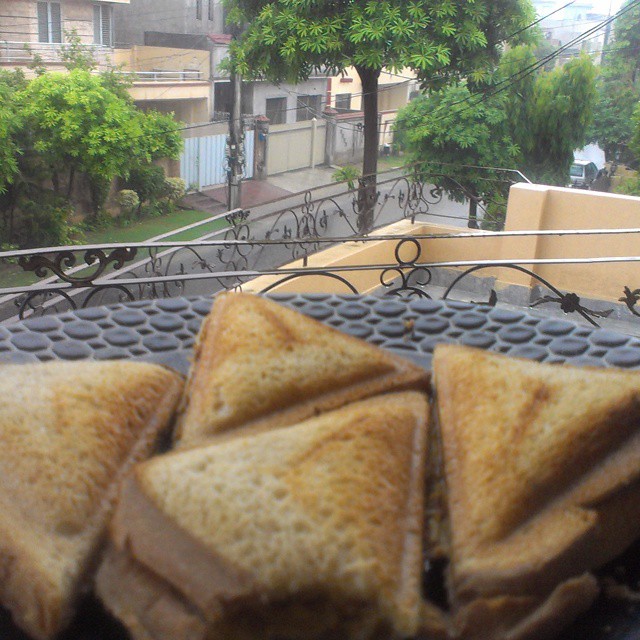
Cold leftover aaloo qeema in a sandwich maker is remarkably good.
Put some qeema between two slices of bread. Do not bother reheating it first. Toast the sandwich until the bread is crisp and the filling is hot.
If it feels a little dry, add a small amount of ketchup.
Yes, ketchup. No, I am not apologising for it. It works.
Substitutions and variations
Variations by mince
Beef qeema. Use lower-fat beef mince if you prefer a cleaner, less greasy finish. Cook until the moisture released by the beef has evaporated and the mince has started browning.
Chicken qeema. Chicken cooks faster. Do not force it through the full beef timing. Once it is cooked through and the excess water has evaporated, move on.
Turkey qeema. Works very well. Because turkey is lean, avoid overcooking before adding the masala ingredients.
Mutton qeema. Expect a stronger flavour and slightly longer cooking time.
Onions, garlic and ginger
Red onions are the default here. White, yellow or French onions are a substitute rather than an equivalent.
Freshly crushed garlic and ginger are my preference, but chopped, frozen cubes or paste all work.
Yoghurt
Use full-fat Greek yoghurt or full-fat natural yoghurt if possible. Low-fat yoghurt is more likely to split and contributes less richness.
Storage, freezing and reheating
Fridge
Cool and refrigerate in a covered container. Reheat until piping hot.
A small splash of water can help if the potatoes have absorbed moisture overnight.
Freezer
Aaloo qeema can be frozen. The flavour survives very well.
The potatoes may become slightly softer after freezing and reheating, but the dish is still very good. Freeze in portions for easier reheating.
Frequently asked questions
What meat is best for aaloo qeema?
Beef and mutton are traditional choices, but this recipe also works well with chicken or turkey mince. The main adjustment is cooking time.
Can I use 500g mince instead of 450g?
Yes. I routinely do. If the packet is 500g, use the whole packet.
Can I use white onions instead of red?
Yes, but red onions are my default for Pakistani cooking and the flavour is closer to what I grew up with.
What yoghurt should I use?
Full-fat Greek yoghurt or full-fat natural yoghurt both work well.
Can I use ginger-garlic paste?
Yes. Freshly crushed is my preference, but chopped, frozen or paste all work.
Is aaloo qeema supposed to be dry?
Not completely. It should be moist and coated in masala, but more dry than wet.
Can I make this with chicken mince?
Yes. Chicken cooks faster than beef or mutton, so shorten the browning stage accordingly.
Can I make this with turkey mince?
Yes. Turkey works very well in this recipe.
What should I serve with aaloo qeema?
Roti is my first choice. Rice also works well.
Can I use leftovers in a sandwich?
Absolutely. A toasted aaloo qeema sandwich is one of the best uses for leftovers.
Recipe card
Pakistani Aaloo Qeema – Mince & Potatoes
By Billie Nabeel Tabassum
- Prep
- 15 min
- Cook
- 45 min
- Total
- 1 hr
- Serves
- 6 servings
- Course
- Main
- Cuisine
- Pakistani
- Spice
- Mild–Medium
- Yield
- Serves 5–6, depending on appetite and sides
Ingredients
Seasoning, water and oil do not always scale perfectly. Start conservatively and adjust according to taste, texture and the pan you're using. Cooking time may also change with batch size.
Ingredients
Equipment
- Large frying pan, sauté pan or karahi-style pan with a lid
- Wooden spoon or spatula
- Knife
- Chopping board
- Mortar and pestle (optional)
Method
- 1
Prep the potatoes
Peel the potatoes and cut them into medium cubes. Try to keep the pieces reasonably similar in size so they cook evenly. You want them small enough to become tender within the final simmer, but large enough that they do not dissolve into the qeema.
- 2
Fry the red onions
Heat the oil over medium heat. Add the finely chopped red onions. Cook, stirring regularly, until they are soft and starting to turn properly golden-brown. Do not rush this stage: the onions become part of the flavour base of the entire dish.
Tip: Colour here is flavour later.
- 3
Add the qeema, ginger and garlic
Add the minced meat, ginger and garlic. Break the mince apart thoroughly with your spatula or spoon and keep stirring. At first the meat may release quite a lot of water. That is normal. Do not immediately move on just because the meat has changed colour.
- 4
Cook until the moisture dries
Continue cooking over medium heat, stirring and breaking up the meat. You are waiting for two things: the liquid released by the mince to evaporate, and the meat to start browning rather than simply steaming. For beef or mutton this may take around 8–10 minutes. Chicken and turkey may need less. Use the pan, not the clock, as your guide.
Tip: Chicken and turkey get there sooner than beef or mutton.
- 5
Add the dry spices
Add the red chilli powder, turmeric, ground coriander and the initial amount of salt. Add approximately 60ml / ¼ cup water and stir continuously for about 2 minutes. This small amount of water helps distribute the spices and prevents them from catching while the masala develops.
- 6
Add the tomatoes and yoghurt
Add the chopped tomatoes and yoghurt. Stir thoroughly and cook for approximately 5–10 minutes, stirring regularly. If the mixture begins to catch or becomes too dry before the tomatoes have properly broken down, add a small splash of water. The aim is a cohesive masala around the mince.
- 7
Add the potatoes
Add the cubed potatoes and mix thoroughly so they are coated in the qeema and masala. Add approximately 200–250ml / around 1 cup water. You do not want to drown the dish. This water is primarily there to cook the potatoes and help the flavours come together.
- 8
Cover and cook
Cover the pan and reduce to low heat. Cook for approximately 25–30 minutes, or until the potatoes are tender, stirring occasionally. The exact time depends on the potato size, the pan, the heat, the meat used and how much liquid is present. If the potatoes are not cooked and the pan is becoming too dry, add a small amount of water. Do not add large amounts at once.
Tip: Small splashes of water, not large pours.
- 9
Add green chillies and coriander
Once the potatoes are nearly tender, add the green chillies and stir them through. Add the chopped fresh coriander near the end. Cook uncovered briefly if the dish is wetter than you want.
- 10
Get the final texture right
The finished aaloo qeema should be moist but not wet. There should be enough masala clinging to the meat and potatoes that the dish feels juicy and rich, but there should not be a pool of gravy around it. If it is too wet, cook uncovered for a few minutes. If it is too dry, add a small splash of water and stir through. Taste and adjust the salt, chilli and coriander.
Tip: More dry than wet, but never dry enough to feel dusty or crumbly.
Notes
Final seasoning. Taste once the potatoes are fully cooked, then adjust the salt, chilli and fresh coriander. I deliberately start with slightly less salt than the original handwritten recipe. It is easier to add salt at the end than to remove it.
Final texture. Moist but more dry than wet. If it is too wet, cook uncovered for a few minutes. If it is too dry, add a small splash of water and stir through. Never dry enough to feel dusty or crumbly.
About the cook
Billie Nabeel Tabassum
British-Pakistani home cook writing down the food he actually makes – with the unwritten bits written down.
Read more about Billie →You might also like
Reviews
Be the first to review this recipe.