
Pakistani Lobia – Black-Eyed Pea Salan
My Lahore-style safed lobia: tender black-eyed peas cooked with red onions, tomato and simple spices. Mild, comforting and made for roti or rice.
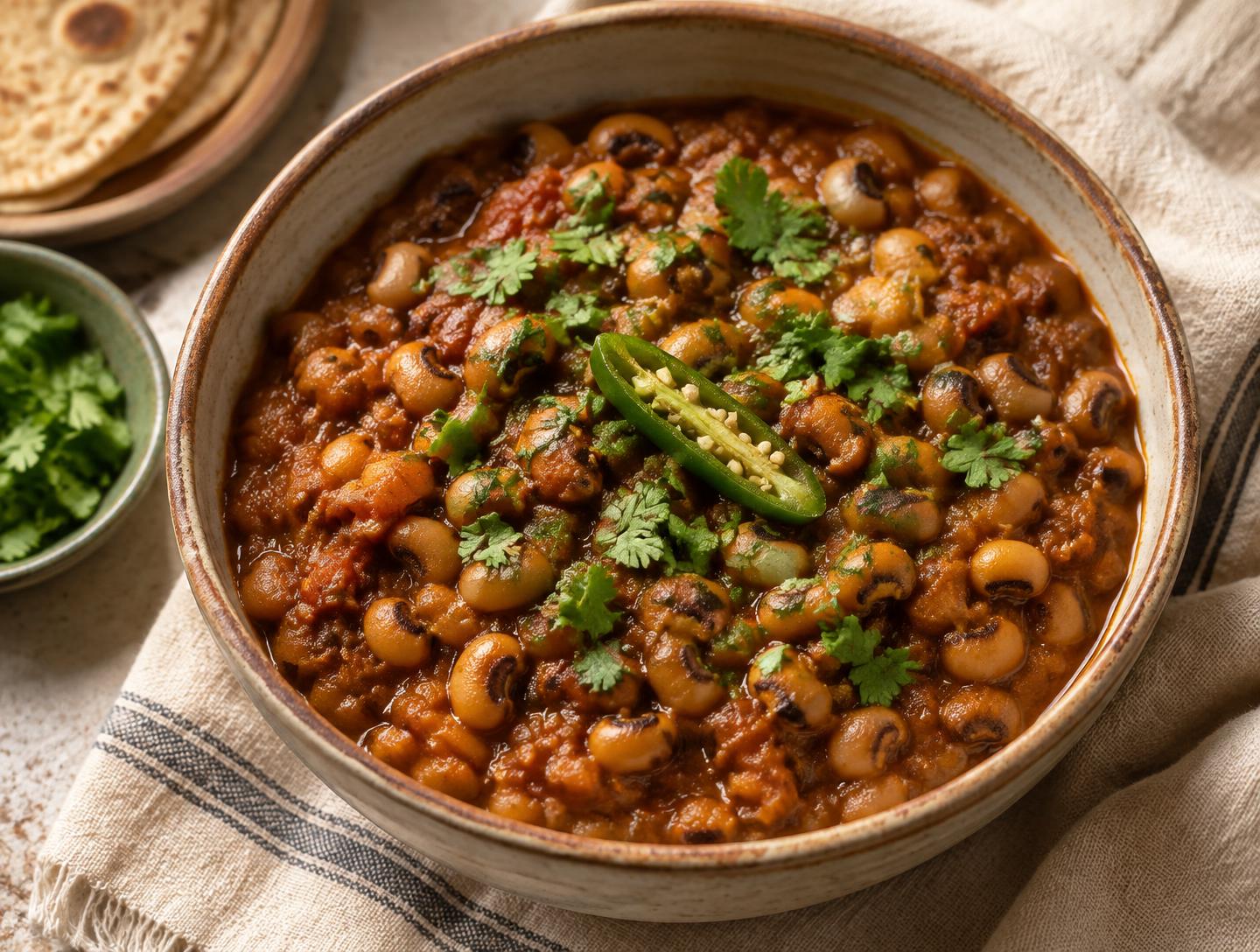
The food I make every birthday
Every birthday, I make lobia.
Or at least I usually do. Life got in the way this year, so I am invoking what I think is an entirely legitimate birthday-month extension.
This is my all-time favourite food.
Not biryani. Not nihari. Not a giant plate of meat.
Black-eyed peas.
Which is slightly unfortunate from a branding perspective because I suspect “Get It Started” by the Black Eyed Peas is substantially better known than this dish.
But perhaps that is exactly why this recipe deserves to exist.
If you grew up in Pakistan, particularly Punjab, you may know these simply as lobia or safed lobia. Elsewhere, black-eyed peas seem condemned surprisingly often to salads.
This is what I think they should be doing instead.
The recipe I wrote down in Lahore
On 1 October 2006, shortly before I returned to Singapore for my studies abroad, my mother taught me how to make my favourite food.
I stood with her in the kitchen and wrote the recipe down as she taught me.
I still have the page.
It is creased, stained and gloriously imprecise.
The recipe specifies:
“2 cups black eyed peas”
That sounds reassuringly scientific until I explain that the “cup” was a teacup from my mother's kitchen cupboard in Lahore with a broken handle.
There were no calibrated measuring cups involved.
Twenty years later, I have translated that measurement into the rather less romantic but much more reproducible:
500g dried black-eyed peas.
The original recipe also contains instructions such as:
“Bhoonofy on low heat.”
And eventually:
“Forget about it. Let it cook till the peas are soft & yummy.”
Frankly, I stand by both instructions.
My original notes from 1 October 2006, written while Mum taught me to make lobia before I returned to university in Singapore. Photograph to come.
What is lobia?
Lobia is a name used across Pakistan and India for various beans and cowpeas.
In my Lahore/Punjabi family, these black-eyed peas are lobia or safed lobia.
We also make laal lobia, using essentially the same recipe but a different bean, and despite the nearly identical method the finished dish tastes remarkably different.
My partner and children prefer laal lobia.
I don't.
This is my website.
Safed lobia goes first.
Is lobia the same as rajma?
Not necessarily.
For many Indian cooks, rajma specifically means kidney beans and, by extension, dishes made from them such as rajma masala or rajma chawal.
Lobia is a broader and sometimes regionally variable vocabulary.
So if you came here looking for rajma, you're in the same general universe of comforting bean dishes, but black-eyed peas are not kidney beans and they behave and taste differently.
When I eventually publish our family's laal lobia, I'll identify the actual bean rather than assuming every regional name maps neatly onto an English one.
This is Pakistani food, but it isn't particularly spicy
Pakistani food has an unfortunate tendency to be described simply as “spicy”.
This dish certainly contains spices.
It doesn't need to be especially chilli-hot.
There is a difference.
My mother's recipe specifies chilli powder, turmeric and coriander, but I generally start slightly below the written chilli and salt quantities and adjust them later.
You can always put more chilli in.
Removing chilli from a huge pot of lobia is a considerably more ambitious culinary operation.
The result should be warming, savoury and deeply comforting rather than aggressively hot.
Step by step
Step 1
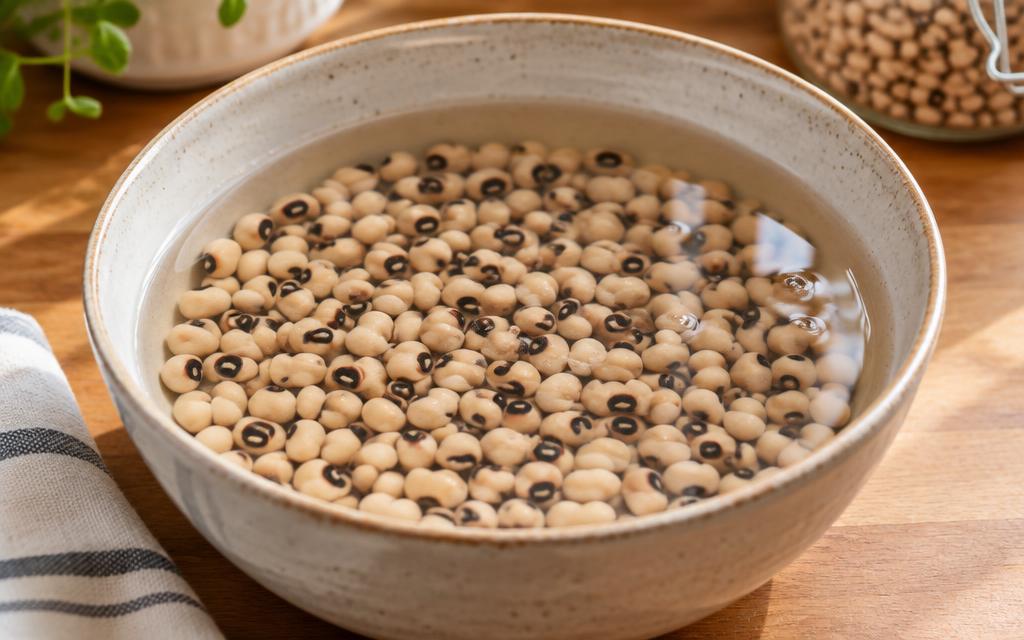
Soak the lobia
Rinse the dried black-eyed peas thoroughly. Cover generously with water and soak for at least 2 hours. Drain before cooking.
Tip: The soak time is a minimum, not a deadline.
Step 2
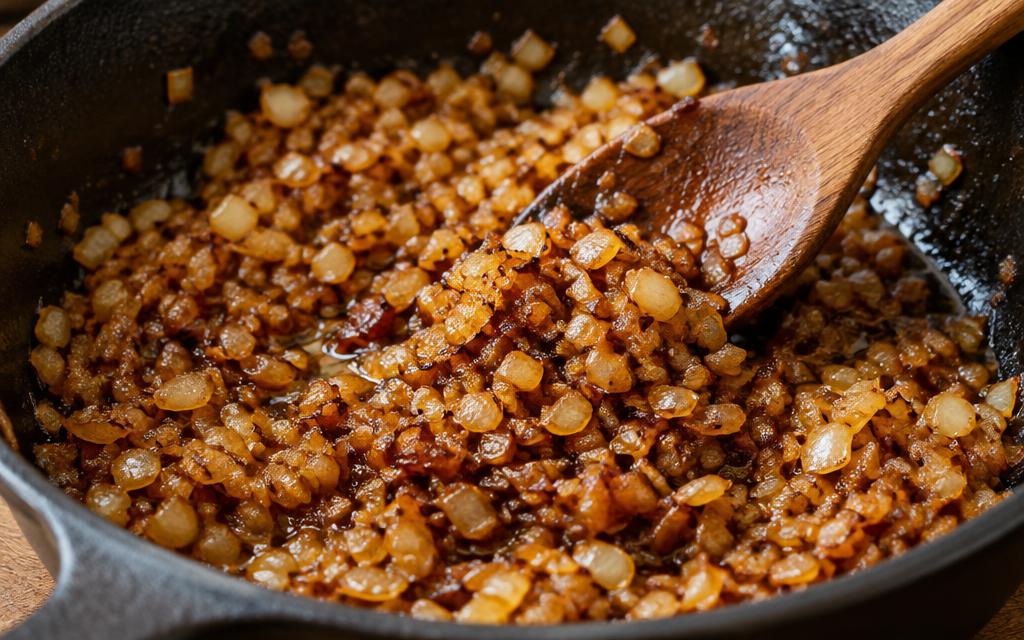
Really brown the onions
Set the Ninja to Sear/Sauté or heat a large heavy pan. Add the oil and sliced onions. Cook until the onions are properly brown. Not translucent. Not pale gold. Brown. Stir frequently enough that they colour evenly rather than burning at the bottom.
Tip: This is one of the main flavour-building stages of the dish.
Step 3
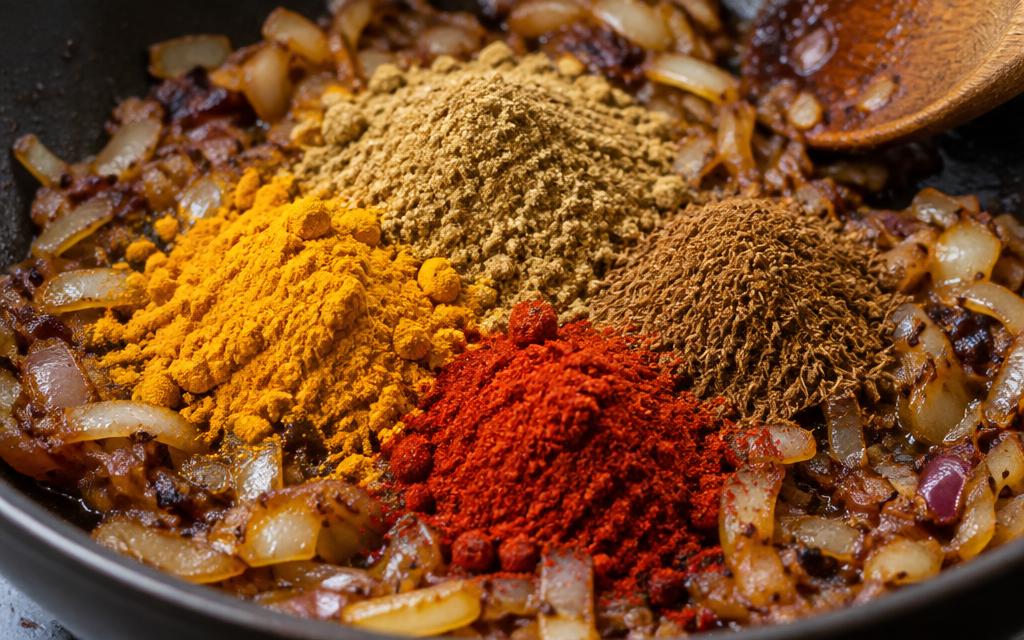
Add water and spices
Once the onions are brown, add around 125ml / ½ cup water. Add the red chilli, turmeric, ground coriander and the initial amount of salt. Stir thoroughly. The water loosens the browned onions and distributes the spices throughout the mixture.
Step 4
Bhoonofy the lobia
Add the drained black-eyed peas. Turn the heat down and cook them through the onion and spice mixture, stirring and turning them regularly. Continue until the excess moisture has cooked away and the lobia are thoroughly coated in the masala.
Tip: Reduce, concentrate, then gently fry. Do not aggressively brown the peas themselves.
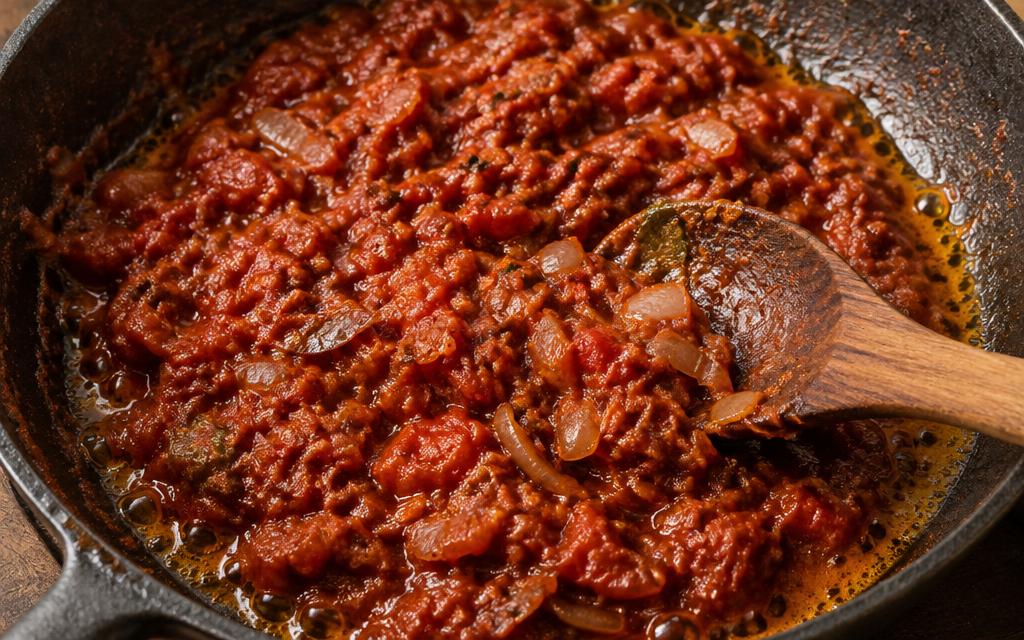
Step 5
Add the tomatoes
Add the tomatoes and stir thoroughly. Cook briefly until everything is combined. Fresh tomatoes are what my original notes specify. A 400g tin works perfectly well, however, and is what I often use when that is what I have in the cupboard.
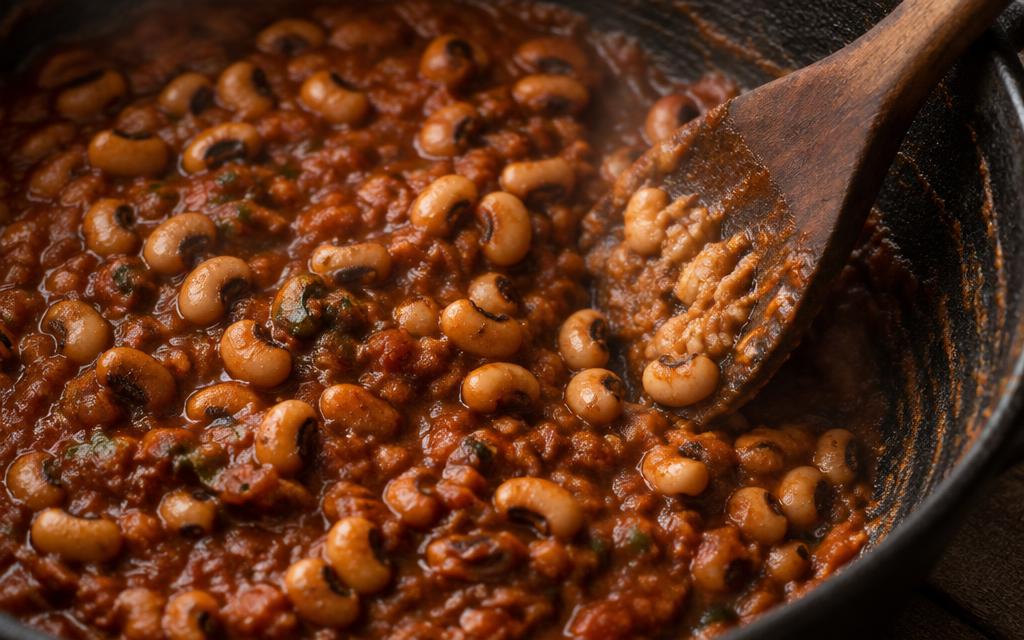
Step 6
Add water
Add enough water to turn the concentrated mixture into a loose gravy. For a 500g batch of dried lobia this will ultimately be somewhere in the region of 750ml to 1 litre, but do not pour blindly according to that number. You are going to assess it again at the end.
Tip: The right amount depends on your beans, soak, cooking method, evaporation and preferred consistency.
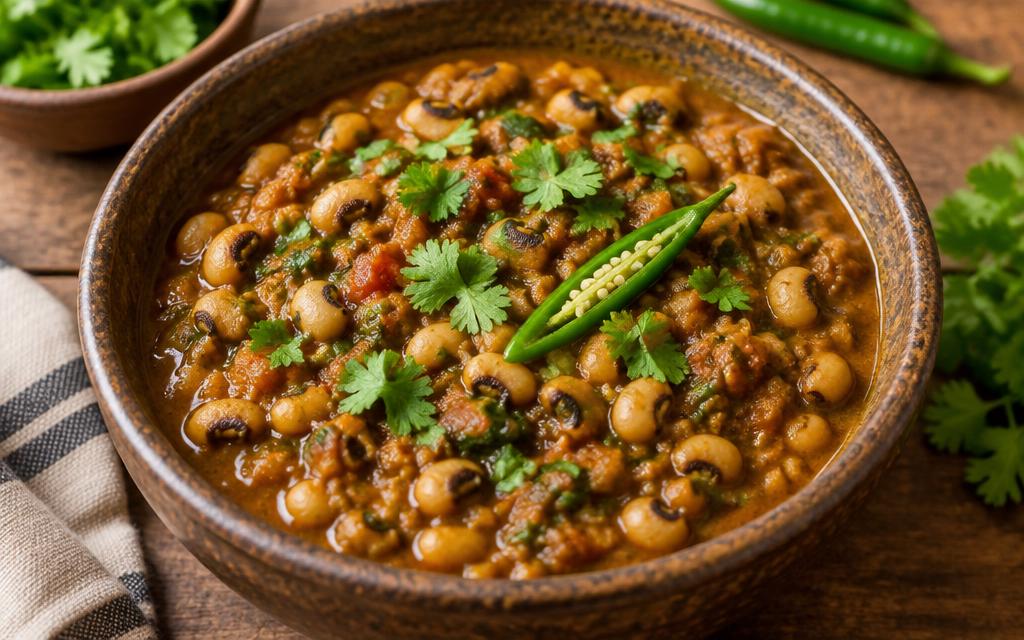
Step 7
Pressure cook
Lock the pressure cooker lid. Cook on High Pressure for approximately 8–10 minutes. Allow about 10 minutes of natural pressure release before releasing the remaining pressure. Open the lid and taste one. You are looking for fully tender but still recognisably intact beans. If they still have a small bite, move back to Sear/Sauté and continue cooking them in the gravy rather than immediately using another long pressure cycle.
Tip: There is a relatively small gap between “these need another few minutes” and black-eyed pea purée.
Step 8
Make them soft & yummy
Use Sear/Sauté or a steady stovetop simmer. Stir periodically and keep tasting individual beans. They are ready when there is no unpleasant firmness or chalkiness in the centre, but most retain their shape. Some beans breaking down is good: the released starch helps turn the cooking liquid into a proper gravy.
Tip: As my 2006 notes say: let it cook till the peas are soft & yummy.
Step 9
Check the consistency and season
Stir around the pot in a circular motion with your spatula. It should move easily through the lobia. If there is too little free liquid to move it comfortably, add water, cook briefly and check again. Finish the dish slightly wetter than you ultimately want it because the beans absorb liquid and the starch thickens the sauce as it cools. Only once the lobia are properly cooked should you adjust the salt and chilli. Serve with taway ki roti or plain rice.
Tip: Finish it loose. Future-you will be grateful.
What to serve with it
How I eat lobia
My first choice is taway ki roti – fresh roti cooked on a tawa.
Break off a piece, scoop up lobia and gravy, repeat until you're questioning whether ten portions was really ten portions.
My Mamoo Sally, however, would vote for rice.
He's not wrong.
Lobia works brilliantly with plain boiled or steamed rice because the rice absorbs the gravy.
My vote: taway ki roti.
Mamoo Sally's vote: rice.
Try both and choose your allegiance.
Substitutions and variations
Pressure cooker vs the original method
My mother's original version didn't involve a Ninja.
Once the tomatoes and water went in, the instruction was essentially to bring everything to the boil and leave it until the beans became tender. That can take a long time.
These days I do all the important flavour-building exactly as before, then use pressure to accelerate the least interesting part.
The pressure cooker doesn't replace the bhoonofying. It replaces the waiting.
No pressure cooker?
You absolutely don't need one.
After adding the tomatoes and water, bring the pot to the boil. Reduce to a steady simmer and cook until the beans are completely tender. Add more water whenever necessary.
Depending on the beans, soak and water chemistry, this can take well over an hour.
Don't cook according to a stopwatch. Cook according to the bean.
A note about hard water
Beans can occasionally be maddeningly reluctant to soften.
Hard water contains calcium and magnesium, which can interact with structures in the bean cell walls and help them remain firm. Acidic ingredients such as tomato can also slow softening.
This doesn't mean tomatoes or British tap water will doom your dinner. It simply explains why one packet may become tender quickly while another behaves as though it has made a personal commitment never to soften.
Pressure cooking helps enormously.
Storage, freezing and reheating
Fridge
Cool and refrigerate in a covered container.
Because the sauce thickens in the fridge, you may need a small amount of water when reheating. If you followed my advice and left the original batch sufficiently loose, however, you shouldn't have to reconstruct the gravy every time.
Freezer
Portion into freezer-safe containers and freeze.
Defrost thoroughly and reheat until piping hot. Again, adjust the consistency with a small amount of water if necessary.
Frequently asked questions
Is Pakistani lobia spicy?
This version is deliberately mild. It contains chilli powder and several spices, but it is intended to be flavourful rather than fiercely hot. Start conservatively with the chilli and add more at the end if you want it hotter.
What is safed lobia in English?
In this recipe, safed lobia means black-eyed peas, also known as black-eyed beans or cowpeas.
Is lobia the same as rajma?
No. Rajma usually refers to kidney beans in Indian cooking. Black-eyed peas are a different legume with a different flavour and texture, although both are used in comforting South Asian bean dishes.
Do I have to soak black-eyed peas?
I recommend soaking them because it makes their cooking more predictable and shortens the cooking time.
Why are my lobia still hard?
Bean age, soaking time, hard water and acidic ingredients such as tomato can all affect softening. Keep cooking them and add water when needed. A pressure cooker can greatly reduce the time.
Can I make lobia without a pressure cooker?
Absolutely. Simmer them gently after adding the tomatoes and water until completely tender, topping up the liquid whenever necessary.
Why is my lobia so thick the next day?
The beans continue absorbing moisture and starch released during cooking thickens the gravy as it cools. Finish the original pot slightly looser than you ultimately want it.
What does bhoonofy mean?
It is my Anglicised use of bhoono or bhunao: cooking ingredients until excess water evaporates and they begin gently frying in the concentrated oil and masala.
Can I make this with kidney beans or rajma?
You can use the same broad method with other beans, but it becomes a different dish. Different legumes have different cooking times, flavours and liquid requirements.
What should I serve with lobia?
I prefer it with taway ki roti. Plain rice is also excellent.
Recipe card
Pakistani Lobia – Black-Eyed Pea Salan
By Billie Nabeel Tabassum
- Prep
- 10 min
- Soaking
- 2 hr
- Cook
- 50 min
- Total
- 3 hr
- Serves
- 10 servings
- Course
- Main
- Cuisine
- Pakistani / Punjabi
- Spice
- Mild
- Yield
- Approximately 10 adult portions
- Vegetarian
- Vegan
- Dairy-free
- Gluten-free
Ingredients
Seasoning, water and oil do not always scale perfectly. Start conservatively and adjust according to taste, texture and the pan you're using. Cooking time may also change with batch size.
Why doesn't this say 2 cups?
My original handwritten recipe does. Unfortunately, Mum's measuring device was a broken-handled teacup in Lahore. I've since upgraded the recipe to scales.
Ingredients
Equipment
- Ninja multi-cooker or other electric pressure cooker (optional)
- Large heavy pan
- Spatula
- Kitchen scales
- Measuring spoons
Method
- 1
Soak the lobia
Rinse the dried black-eyed peas thoroughly. Cover generously with water and soak for at least 2 hours. Drain before cooking.
Tip: The soak time is a minimum, not a deadline.
- 2
Really brown the onions
Set the Ninja to Sear/Sauté or heat a large heavy pan. Add the oil and sliced onions. Cook until the onions are properly brown. Not translucent. Not pale gold. Brown. Stir frequently enough that they colour evenly rather than burning at the bottom.
Tip: This is one of the main flavour-building stages of the dish.
- 3
Add water and spices
Once the onions are brown, add around 125ml / ½ cup water. Add the red chilli, turmeric, ground coriander and the initial amount of salt. Stir thoroughly. The water loosens the browned onions and distributes the spices throughout the mixture.
- 4
Bhoonofy the lobia
Add the drained black-eyed peas. Turn the heat down and cook them through the onion and spice mixture, stirring and turning them regularly. Continue until the excess moisture has cooked away and the lobia are thoroughly coated in the masala.
Tip: Reduce, concentrate, then gently fry. Do not aggressively brown the peas themselves.
- 5
Add the tomatoes
Add the tomatoes and stir thoroughly. Cook briefly until everything is combined. Fresh tomatoes are what my original notes specify. A 400g tin works perfectly well, however, and is what I often use when that is what I have in the cupboard.
- 6
Add water
Add enough water to turn the concentrated mixture into a loose gravy. For a 500g batch of dried lobia this will ultimately be somewhere in the region of 750ml to 1 litre, but do not pour blindly according to that number. You are going to assess it again at the end.
Tip: The right amount depends on your beans, soak, cooking method, evaporation and preferred consistency.
- 7
Pressure cook
Lock the pressure cooker lid. Cook on High Pressure for approximately 8–10 minutes. Allow about 10 minutes of natural pressure release before releasing the remaining pressure. Open the lid and taste one. You are looking for fully tender but still recognisably intact beans. If they still have a small bite, move back to Sear/Sauté and continue cooking them in the gravy rather than immediately using another long pressure cycle.
Tip: There is a relatively small gap between “these need another few minutes” and black-eyed pea purée.
- 8
Make them soft & yummy
Use Sear/Sauté or a steady stovetop simmer. Stir periodically and keep tasting individual beans. They are ready when there is no unpleasant firmness or chalkiness in the centre, but most retain their shape. Some beans breaking down is good: the released starch helps turn the cooking liquid into a proper gravy.
Tip: As my 2006 notes say: let it cook till the peas are soft & yummy.
- 9
Check the consistency and season
Stir around the pot in a circular motion with your spatula. It should move easily through the lobia. If there is too little free liquid to move it comfortably, add water, cook briefly and check again. Finish the dish slightly wetter than you ultimately want it because the beans absorb liquid and the starch thickens the sauce as it cools. Only once the lobia are properly cooked should you adjust the salt and chilli. Serve with taway ki roti or plain rice.
Tip: Finish it loose. Future-you will be grateful.
Notes
The spatula test. You should be able to move your spatula freely around the pot in a circular stirring motion. If you can't, the lobia are too thick and need more water. Finish them slightly more watery than you ultimately want to eat them – they thicken substantially as they cool.
The pressure-cooking time is deliberately conservative. Black-eyed peas vary according to their age and soak. It is safer to finish slightly firm beans by simmering them than to pressure cook them until they disintegrate.
Why doesn't this say 2 cups? My original handwritten recipe does. Unfortunately, Mum's measuring device was a broken-handled teacup in Lahore. I've since upgraded the recipe to scales.
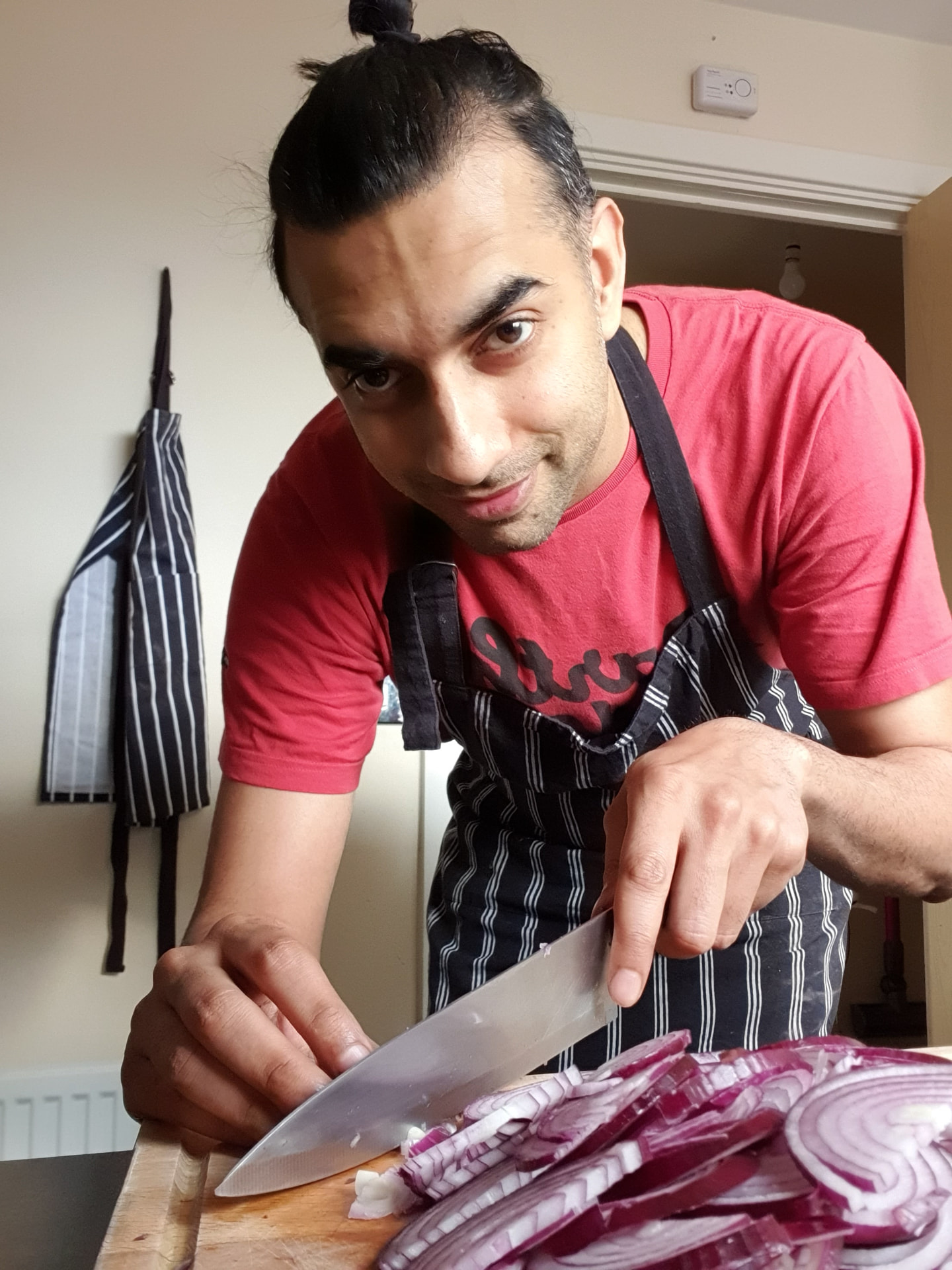
About the cook
Billie Nabeel Tabassum
British-Pakistani home cook writing down the food he actually makes – with the unwritten bits written down.
Read more about Billie →You might also like
Reviews
Be the first to review this recipe.